How an Oil Purification Machine Extends Hydraulic & Lubricating Oil Life
Hydraulic and lubricating oils are designed to perform reliably under demanding industrial conditions. They reduce friction, protect moving components, transfer hydraulic power and help control operating temperatures. However, the condition of oil gradually changes as machinery operates. Learn more about our company and industrial oil purification expertise.
Particles, moisture, sludge, oxidation products and other contaminants can enter the oil during normal operation. When these substances continue circulating, they can accelerate oil degradation and increase the stress placed on machine components.
This is where an oil purification machine can become an important part of an industrial maintenance program. By removing specific contaminants from oil, purification helps maintain cleaner fluid and can support longer useful oil service intervals when the oil remains chemically suitable for continued use.
- What Actually Shortens the Life of Industrial Oil?
- What Does an Oil Purification Machine Do?
- How Purification Can Support Longer Oil Life
- Different Purification Technologies for Different Oil Problems
- Hydraulic Oil: How Purification Supports Longer Service
- Lubricating Oil: Protecting Fluid Performance
- The Connection Between Cleaner Oil and Equipment Life
- Benefits of Extending Oil Service Life
- Why Oil Analysis Is Important
- A Practical Oil-Life Extension Strategy
- How to Select an Oil Purification Machine
- Important Limitation: Purification Does Not Reverse Every Type of Oil Degradation
- Conclusion
- FAQs
What Actually Shortens the Life of Industrial Oil?
Oil does not become unusable for only one reason. Several factors can work together to accelerate deterioration.
Solid Contamination
Dust, dirt and metal wear particles can enter hydraulic and lubrication systems. These particles may circulate through pumps, valves, bearings, gears and other components.
Apart from affecting machinery, continuous particle contamination can also contribute to further oil degradation.
Water and Moisture
Water is one of the most important contaminants in many industrial oil systems. It can:
- Reduce lubrication effectiveness
- Promote corrosion
- Encourage oxidation
- Affect additive performance
- Contribute to sludge or emulsion formation
For applications exposed to condensation, leaks or humid environments, moisture control is especially important.
Oxidation
Oil reacts gradually with oxygen, particularly under high-temperature operating conditions.
As oxidation progresses, the oil can develop acids, sludge, varnish-forming materials and other degradation products.
Heat
High operating temperatures can accelerate oxidation and shorten the useful life of lubricating and hydraulic fluids.
This means oil purification should be combined with proper temperature management rather than treated as a solution to excessive thermal stress.
Contaminant Recirculation
Once contamination enters a circulating oil system, it can continue moving through the machinery unless it is effectively removed.
Continuous or periodic purification can help interrupt this cycle.
What Does an Oil Purification Machine Do?
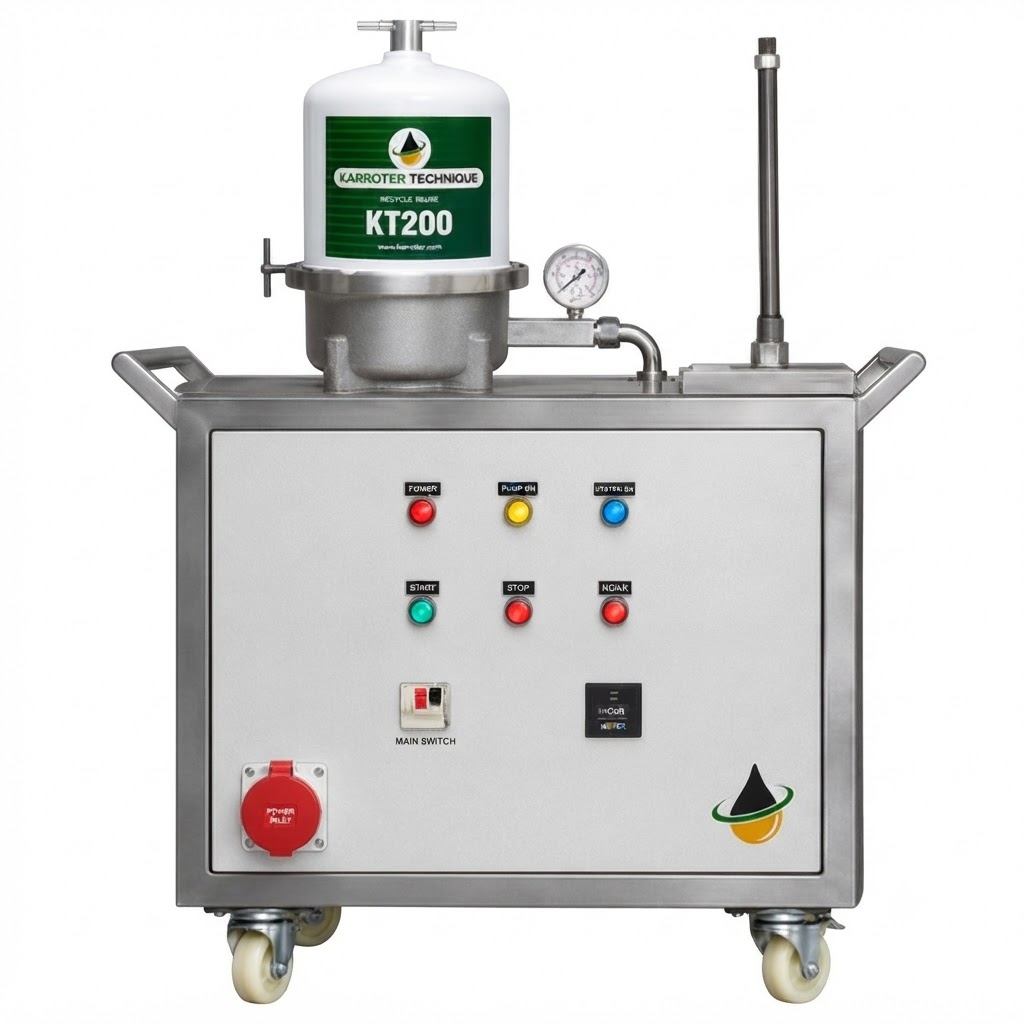
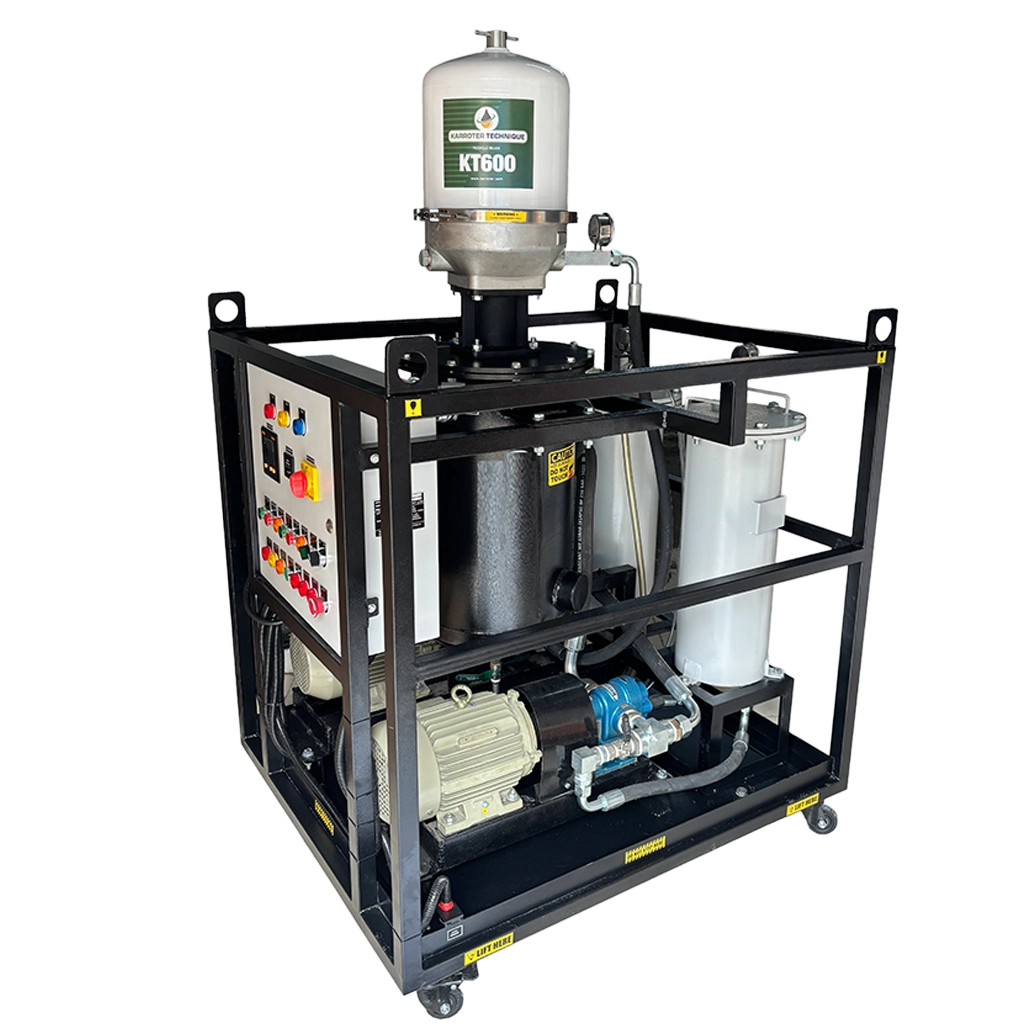
An oil purification machine is designed to remove specific contaminants from industrial oil.
The exact cleaning process depends on the technology used.
A typical system works through:
Oil Collection → Purification → Contaminant Separation → Cleaner Oil → Return to Equipment
The machine may operate as an offline system, kidney-loop system or integrated purification arrangement.
The objective is to continuously or periodically improve oil cleanliness while maintaining the oil in a condition suitable for the equipment.
How Purification Can Support Longer Oil Life
Oil purification does not "make old oil new." Instead, it helps control contamination factors that contribute to oil degradation.
1. Removing Particles
Mechanical filtration and other separation technologies can remove solid contaminants from oil.
By controlling particles, industries can reduce the amount of abrasive material circulating through the oil system.
Cleaner oil also means fewer contaminants are repeatedly exposed to the fluid and machinery.
2. Controlling Moisture
For applications affected by water contamination, dehydration or vacuum-based purification can help remove moisture.
Reducing water can help control corrosion, lubrication problems and moisture-related degradation.
3. Reducing Sludge
Sludge can form as oil oxidizes and contaminants accumulate.
Appropriate purification technologies can remove suitable sludge and suspended degradation products, helping maintain better oil cleanliness.
4. Managing Fine Contamination
Not all contaminants are large enough to be easily captured by conventional filtration.
Electrostatic Liquid Cleaning (ELC) can be used in suitable applications to attract and collect selected fine and polar contaminants, including certain oxidation-related materials.
5. Reducing Contaminant Stress
When contaminants remain in the oil, they can contribute to a continuous cycle of wear and degradation.
Purification helps reduce this contaminant load, creating a cleaner operating environment for both the oil and machinery.
Different Purification Technologies for Different Oil Problems
There is no single oil purification machine suitable for every application.
- Mechanical Filtration: Mechanical filters use filter media to capture solid particles. Best suited for dust, dirt, metal particles and general particulate contamination.
- Centrifugal Oil Purification: Centrifugal systems use rotational force to separate suitable contaminants according to density. Best suited for certain solid particles, sludge and heavier contaminants.
- Vacuum Dehydration: Vacuum purification uses reduced pressure to assist in removing water and moisture from oil. Best suited for oil systems where moisture contamination is a major concern.
- Low Vacuum Dehydration: LVDH systems use controlled heating and vacuum conditions to remove moisture from compatible industrial oils. Best suited for hydraulic, turbine and lubrication oils affected by water contamination.
- Electrostatic Liquid Cleaning: ELC systems use an electrostatic field to attract and collect selected fine and polar contaminants. Best suited for certain fine suspended contaminants, oxidation products, sludge and varnish-related materials.
The right technology should always be selected according to the oil condition and contamination profile.
Hydraulic Oil: How Purification Supports Longer Service
Hydraulic systems depend on oil for both lubrication and power transmission.
Contamination can affect pumps, valves, actuators and other precision components.
An oil purification program can help maintain cleaner hydraulic oil by controlling particles, moisture and other application-specific contaminants.
When the oil remains chemically healthy, maintaining better cleanliness can support longer service intervals and reduce unnecessary oil replacement.
However, purification cannot compensate for severe thermal degradation, depleted additives or oil that has chemically reached the end of its useful life.
Lubricating Oil: Protecting Fluid Performance
Lubricating oil is responsible for creating a protective film between moving surfaces. This is particularly important in:
- Gearboxes
- Bearings
- Turbines
- Compressors
- Circulating lubrication systems
- Industrial machinery
Contamination can interfere with effective lubrication and contribute to component wear.
By controlling suitable contaminants, purification can help maintain a cleaner lubrication environment and support the continued use of oil that remains chemically suitable.
The Connection Between Cleaner Oil and Equipment Life
Oil and machinery have a direct relationship.
Poor oil condition can contribute to component wear, while component wear can generate additional contamination.
This can create a cycle:
Contamination → Component Wear → More Particles → Further Oil Contamination
Oil purification helps interrupt this cycle by removing contaminants before they continue circulating through the equipment.
This is why purification is often considered part of a broader reliability and preventive-maintenance strategy.
Benefits of Extending Oil Service Life
When oil remains suitable for continued operation, effective purification can provide several practical advantages.
- Reduced Oil Consumption: Longer service intervals can reduce the frequency of complete oil replacement.
- Lower Waste Generation: Using suitable oil for longer can reduce the amount of used oil requiring disposal.
- Better Equipment Availability: A structured purification program can support preventive maintenance and help reduce contamination-related interruptions.
- Improved Oil Cleanliness: Continuous or scheduled purification helps maintain a more controlled fluid condition.
- Better Maintenance Planning: Oil analysis combined with purification allows maintenance teams to make decisions based on actual oil condition.
Why Oil Analysis Is Important
Oil purification and oil analysis work best together.
Oil analysis can help determine:
- Particle levels
- Moisture content
- Viscosity
- Oxidation condition
- Acid number
- Wear metals
- Additive condition
- Overall fluid health
This information helps answer whether the oil needs:
Filtration → Dehydration → Electrostatic Cleaning → Further Treatment → Replacement
Without oil analysis, it can be difficult to determine whether purification is actually addressing the main cause of oil degradation.
A Practical Oil-Life Extension Strategy
A structured approach can be built around six stages:
- Monitor: Regularly inspect equipment and collect oil samples.
- Analyse: Check contamination and chemical condition.
- Identify: Determine what is shortening the oil's useful life.
- Purify: Select the appropriate oil purification technology.
- Verify: Test the oil again to confirm the effectiveness of the treatment.
- Maintain: Continue monitoring oil condition and equipment performance.
This creates a continuous improvement cycle rather than relying only on fixed oil-change schedules.
How to Select an Oil Purification Machine
When selecting equipment, consider:
- Type of oil
- Reservoir capacity
- Contamination type
- Moisture level
- Required flow rate
- Operating temperature
- Oil viscosity
- Existing filtration
- Required purification level
- Automation requirements
- Maintenance requirements
- Manufacturer support
A properly sized system can provide more effective oil circulation and purification without unnecessary operating costs.
Important Limitation: Purification Does Not Reverse Every Type of Oil Degradation
It is important to understand that purification is not a complete replacement for oil management.
An oil purifier can remove contaminants, but it cannot necessarily restore:
- Depleted additives
- Severe oxidation damage
- Excessive thermal degradation
- Irreversible chemical changes
- Oil with unsuitable viscosity caused by severe degradation
For this reason, industries should use oil analysis to determine whether purification or replacement is appropriate.
Conclusion
An oil purification machine can play an important role in extending the useful service life of hydraulic and lubricating oils by controlling contaminants that contribute to fluid degradation and equipment problems.
Mechanical filtration can target solid particles, centrifugal systems can separate suitable dense contaminants, vacuum and LVDH systems can focus on moisture, while ELC technology can help manage selected fine and polar contaminants.
The greatest value comes from matching the purification technology to the actual oil condition.
When purification is combined with regular oil analysis, temperature control, contamination prevention and preventive maintenance, industries can maintain cleaner oil, reduce unnecessary replacement and support more reliable machinery operation.
In simple terms: Cleaner Oil + Proper Monitoring + Suitable Purification = Better Oil-Life Management
Explore our oil purification system to learn more about the equipment and its suitability for your oil purification requirements.
FAQs
Yes, purification can support longer hydraulic oil service intervals by removing suitable contaminants when the oil remains chemically fit for continued use.
It can. Removing particles, moisture and selected degradation products may help maintain the condition of lubricating oil and support longer service intervals.
No. Purification removes specific contaminants but cannot fully reverse severe oxidation, additive depletion or other irreversible chemical degradation.
Vacuum dehydration or LVDH technology may be suitable for applications where moisture is the primary contamination concern. The exact choice depends on oil type and operating conditions.
There is no universal interval. Purification frequency should be based on oil analysis, contamination levels, equipment operating conditions and the purification system used.
Oil analysis is highly recommended because it helps determine the actual condition of the oil and whether purification, continued operation or replacement is appropriate. Visit our home page to explore our solutions, or contact us to discuss your application.
Need help choosing the right oil filtration or purification machine?
Talk to our team with your oil type, volume and contamination details and get a suitable recommendation.
Enquire Now WhatsApp UsExplore our home page for more industrial oil purification solutions, or contact us to discuss your application and requirements.