Centrifugal Oil Filtration Machine: Working, Applications & Buying Guide for Indian Industries
Clean oil is one of the foundations of reliable industrial machinery. Whether it is used in hydraulic systems, gearboxes, compressors, engines, turbines, or heavy-duty manufacturing equipment, oil helps reduce friction, control heat, protect components, and maintain smooth operation. Over time, however, oil can collect dust, metal particles, sludge, carbon deposits, and other contaminants. If these impurities continue circulating through equipment, they can affect oil performance and increase the risk of unnecessary wear and maintenance. Learn more about our company and industrial oil purification expertise.
A centrifugal oil filtration machine offers a practical and efficient way to manage these contaminants. By using centrifugal force, the machine separates suitable impurities from oil and helps maintain a cleaner oil stream. For industries in India looking to improve oil management, protect valuable machinery, and support efficient plant operations, centrifugal filtration can be an important part of a well-planned maintenance strategy.
- Centrifugal Oil Filtration System
- What Is a Centrifugal Oil Filtration Machine?
- How Does a Centrifugal Oil Filtration Machine Work?
- Why Is Centrifugal Oil Filtration Important for Industries?
- Key Benefits of a Centrifugal Oil Filtration Machine
- Applications of Centrifugal Oil Filtration Machines
- Buying Guide: How to Choose the Right Centrifugal Oil Filtration Machine?
- Centrifugal Filtration for a Smarter Oil Management Strategy
- Maintenance Tips for Better Filtration Performance
- Why Invest in the Right Centrifugal Oil Filtration Machine?
- Conclusion
- FAQs
Centrifugal Oil Filtration System
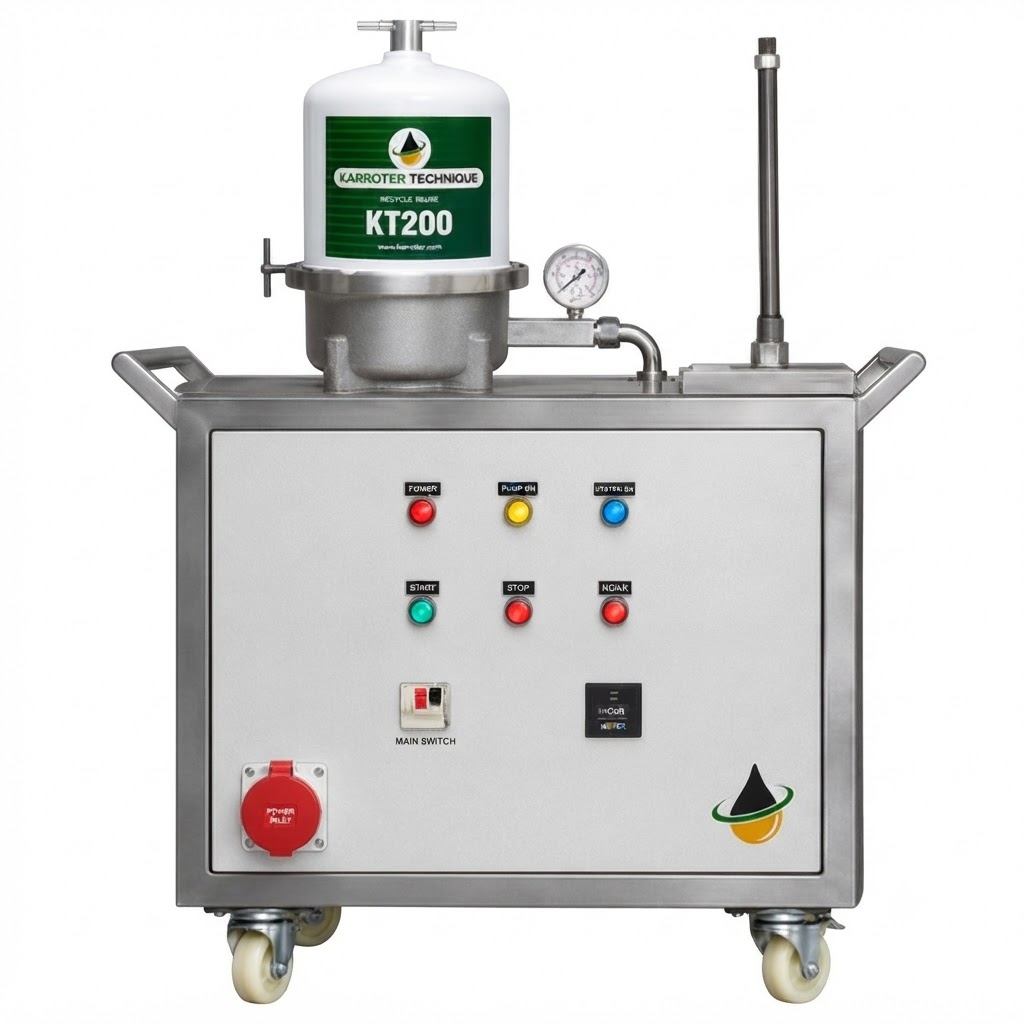
Choosing the right centrifugal oil filtration system can make a significant difference to the performance and long-term value of an oil filtration solution. Experienced manufacturers understand that every industrial application has different requirements, including oil type, viscosity, contamination level, flow rate, operating temperature, and equipment configuration. They can provide filtration machines in suitable capacities and configurations for different industrial environments. A reliable manufacturer can also assist with machine selection, installation, operation, maintenance, and technical support, helping industries adopt an oil filtration solution that fits smoothly into their existing processes.
What Is a Centrifugal Oil Filtration Machine?
A centrifugal oil filtration machine is an industrial filtration system designed to separate contaminants from oil using centrifugal force. Instead of depending entirely on conventional filter elements, the machine uses high-speed rotation to separate heavier particles from the oil.
When contaminated oil enters the rotating chamber, centrifugal force causes denser contaminants to move toward the outer collection area. The comparatively cleaner oil continues through the system and can be returned to the equipment or oil reservoir.
This straightforward principle makes centrifugal filtration an attractive option for industries that regularly deal with contaminated oil and want to maintain better control over oil cleanliness.
How Does a Centrifugal Oil Filtration Machine Work?
The working process of a centrifugal oil filtration machine can be explained in a few simple stages.
Oil Enters the Filtration System
Contaminated oil is transferred from the machine, oil reservoir, storage tank, or lubrication circuit to the filtration unit.
High-Speed Rotation Creates Centrifugal Force
Inside the filtration machine, the oil enters a rotating chamber or rotor. The high-speed rotation generates centrifugal force.
Contaminants Are Separated
Heavier contaminants suspended in the oil are pushed toward the outer collection surface. Depending on the system and operating conditions, these may include sludge, dirt, carbon deposits, wear particles, and other dense solid contaminants.
Cleaner Oil Leaves the Machine
After the separation process, the cleaner oil exits through the outlet and can be returned to the relevant equipment or reservoir.
Collected Contaminants Are Removed
The separated contaminants accumulate in the designated collection area. Regular cleaning keeps the system ready for continued operation.
This process can be repeated as part of a planned oil-maintenance program.
Why Is Centrifugal Oil Filtration Important for Industries?
Industrial equipment represents a significant investment, and maintaining it properly is essential for dependable production. Oil contamination may appear to be a small issue, but over time, contaminated oil can contribute to wear and affect the performance of components.
Regular oil filtration helps industries take a proactive approach to contamination control. Instead of waiting for oil-related problems to affect equipment, businesses can incorporate filtration into their preventive maintenance practices.
A cleaner oil stream can support effective lubrication, help protect machine components, and contribute to more consistent equipment operation.
Key Benefits of a Centrifugal Oil Filtration Machine
- Helps Maintain Cleaner Oil: The primary purpose of the machine is to separate suitable contaminants from oil. Maintaining cleaner oil can support better lubrication and oil-management practices.
- Supports Equipment Protection: Removing unwanted solid contaminants can help reduce the circulation of abrasive particles through gears, bearings, hydraulic components, and other precision parts.
- Can Support Longer Oil Service Life: Contamination is one factor that affects oil condition. Regular filtration can help control contaminants and potentially reduce unnecessary oil replacement when the oil remains chemically suitable for use.
- Supports Preventive Maintenance: Oil filtration can become part of a planned maintenance program, allowing industries to address contamination before it contributes to larger operational issues.
- Reduces Dependence on Disposable Filter Media: Depending on the machine design and application, centrifugal filtration can reduce the need for frequently replacing conventional disposable filter elements.
- Helps Improve Operational Reliability: Consistent oil management supports the smooth operation of oil-dependent machinery and can contribute to more reliable industrial processes.
Applications of Centrifugal Oil Filtration Machines
Centrifugal oil filtration machines can be used across a wide range of industries and applications.
Hydraulic Systems
Hydraulic equipment requires clean oil for reliable operation of pumps, valves, cylinders, and other components. Filtration helps manage contaminants within the hydraulic circuit.
Gearboxes
Gearboxes depend on effective lubrication to operate under demanding loads. Oil filtration can help control particles that may contribute to abrasive wear.
Engines
Engine oil can collect soot, carbon, metallic particles, and other contaminants during operation. Centrifugal filtration can support oil-cleaning and maintenance practices.
Compressors
Compressor lubrication systems require suitable oil condition for reliable operation. Filtration can help control contaminants introduced during operation.
Power Generation Equipment
Turbines and other power-generation equipment rely on carefully maintained lubrication systems. Oil filtration can support contamination management in these critical applications.
Manufacturing Machinery
Industrial production equipment often operates for long hours under demanding conditions. Maintaining cleaner oil can support equipment reliability and planned maintenance.
Heavy-Duty Equipment
Construction, engineering, and other heavy-duty machinery can experience challenging operating environments. Oil filtration can help manage contamination and support equipment maintenance.
Buying Guide: How to Choose the Right Centrifugal Oil Filtration Machine?
Selecting the right filtration machine is an important investment decision. Rather than choosing a machine based only on price, industries should consider how well it matches their actual application.
- Consider the Type of Oil: Start with the oil that needs to be filtered. Hydraulic oil, gear oil, lubricating oil, engine oil, compressor oil, and turbine oil can have different characteristics and filtration requirements.
- Check the Required Flow Rate: Determine how much oil needs to be processed and how frequently filtration will be performed. Selecting an appropriate flow capacity helps ensure efficient operation.
- Understand the Contamination: Identify the type and level of contamination present in the oil. Oil analysis can provide valuable information about particles, sludge, wear debris, and other contaminants.
- Consider Operating Temperature: Oil viscosity changes with temperature. The filtration system should be suitable for the actual operating temperature and viscosity of the application.
- Look at Maintenance Requirements: A good filtration system should be practical to operate and maintain. Check how contaminants are removed, how frequently cleaning is required, and how easily important components can be accessed.
- Evaluate Build Quality: Industrial equipment should be designed for the environment in which it will operate. Consider the construction quality, rotor, seals, pump, piping, controls, and other components.
- Consider Automation: Industries with continuous operations may benefit from automated or semi-automated filtration systems. For periodic applications, a simpler configuration may be appropriate.
- Choose a Reliable Manufacturer: Technical support is an important part of any industrial equipment investment. Consider the manufacturer's experience, customization capabilities, installation support, spare-parts availability, warranty, and after-sales service.
Centrifugal Filtration for a Smarter Oil Management Strategy
Modern industries are increasingly focused on improving efficiency while controlling operating and maintenance costs. Oil filtration can support this approach by helping businesses make better use of their existing oil and equipment.
Instead of viewing filtration simply as an additional machine, industries can consider it as part of a broader oil-management strategy. Regular filtration, oil analysis, proper storage, scheduled maintenance, and timely replacement can work together to maintain oil quality and protect equipment.
The result is a more organized approach to machinery care, helping maintenance teams identify contamination issues and respond before they become larger problems.
Maintenance Tips for Better Filtration Performance
Regular maintenance is essential for achieving consistent performance from any filtration equipment.
Industries should inspect the filtration machine according to the manufacturer's recommendations and clean the contaminant collection area at appropriate intervals. Pumps, connections, seals, piping, and rotating components should also be checked regularly.
Oil condition should be monitored through suitable testing. Filtration can remove certain physical contaminants, but it does not reverse every form of oil degradation. Factors such as oxidation, moisture, thermal stress, and additive depletion should also be considered.
Following a structured maintenance schedule helps keep both the filtration machine and the connected equipment operating efficiently.
Why Invest in the Right Centrifugal Oil Filtration Machine?
The right filtration machine can become a valuable part of an industry's maintenance and oil-management program. By helping control contamination, it supports cleaner oil and provides an additional layer of protection for expensive industrial equipment.
For businesses, the goal is not simply to filter oil. It is to create a more reliable maintenance process, reduce avoidable contamination problems, and make better use of equipment and resources.
With the right system, proper operating practices, and regular oil monitoring, industries can build a dependable approach to oil cleanliness that supports long-term operational efficiency.
Conclusion
A centrifugal oil filtration machine provides industries with a practical way to manage suitable contaminants in industrial oils. Its centrifugal separation principle makes it useful for hydraulic systems, gearboxes, engines, compressors, power-generation equipment, manufacturing machinery, and many other applications.
For Indian industries, choosing the right system means looking beyond basic machine capacity. Oil type, viscosity, contamination, flow rate, operating temperature, maintenance requirements, automation, construction quality, and manufacturer support should all be considered.
A well-selected filtration system can help maintain cleaner oil, support equipment protection, improve maintenance practices, and contribute to reliable industrial operations. By working with an experienced manufacturer and combining filtration with regular oil analysis and preventive maintenance, businesses can take a proactive step toward better oil management and longer-lasting equipment.
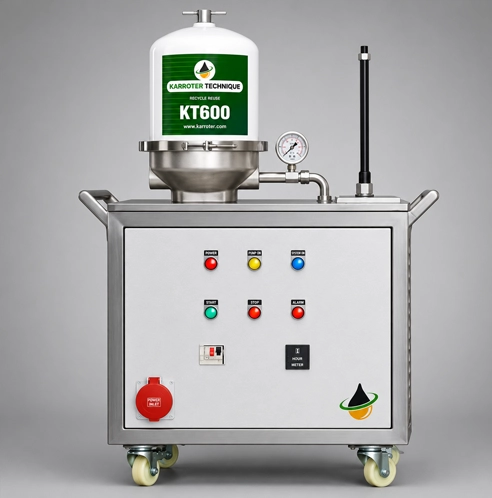
Explore our portable trolley-mounted centrifugal oil filtration system to learn more about the equipment and its suitability for your oil purification requirements.
FAQs
A centrifugal oil filtration machine is equipment that uses centrifugal force to separate suitable solid contaminants from industrial oil and help maintain better oil cleanliness.
They are used in hydraulic systems, gearboxes, engines, compressors, turbines, manufacturing machinery, heavy equipment, and other industrial applications where oil cleanliness is important.
Yes, controlling physical contaminants can help maintain oil cleanliness and may support longer oil service intervals when the oil is still chemically suitable for continued use.
Consider the oil type, viscosity, contamination level, required flow rate, operating temperature, oil volume, installation conditions, maintenance requirements, and desired level of automation.
An experienced manufacturer can help match the filtration system to the application's technical requirements and provide guidance on machine selection, installation, maintenance, spare parts, and technical support. Visit our home page to explore our solutions, or contact us to discuss your application.
Need help choosing the right oil filtration or purification machine?
Talk to our team with your oil type, volume and contamination details and get a suitable recommendation.
Enquire Now WhatsApp UsExplore our home page for more industrial oil purification solutions, or contact us to discuss your application and requirements.