Low Vacuum Dehydration (LVDH) Machine: A Complete Guide for Industrial Oil Systems
Water and moisture are among the most common contaminants that can affect the performance and service life of industrial oils. Hydraulic systems, lubrication circuits, turbines, gearboxes, compressors, and other oil-based equipment can be exposed to moisture through condensation, humid environments, leaks, improper storage, or operating conditions. When water enters oil, it can reduce lubrication performance, promote corrosion, accelerate oil degradation, and affect sensitive machine components. A Low Vacuum Dehydration (LVDH) machine provides an effective solution for removing dissolved and free water from industrial oil while helping maintain the oil in a suitable condition for continued use. Learn more about our company and industrial oil purification expertise.
LVDH technology uses controlled vacuum conditions and heat to separate moisture from oil. By lowering the boiling point of water under vacuum, the system can remove moisture at temperatures that are generally suitable for many industrial oils. This makes low vacuum dehydration an important oil-purification technology for industries focused on preventive maintenance, equipment reliability, and efficient oil management.
- Low Vacuum Dehydration Machine
- What Is a Low Vacuum Dehydration (LVDH) Machine?
- Why Is Water Contamination a Problem for Industrial Oil?
- How Does an LVDH Machine Work?
- Main Components of an LVDH Oil Purification Machine
- Types of Water Contamination in Industrial Oil
- Applications of Low Vacuum Dehydration Machines
- Benefits of an LVDH Machine
- LVDH vs. Conventional Oil Filtration
- How to Choose the Right LVDH Machine?
- Maintenance Tips for LVDH Machines
- Conclusion
- FAQs
Low Vacuum Dehydration Machine
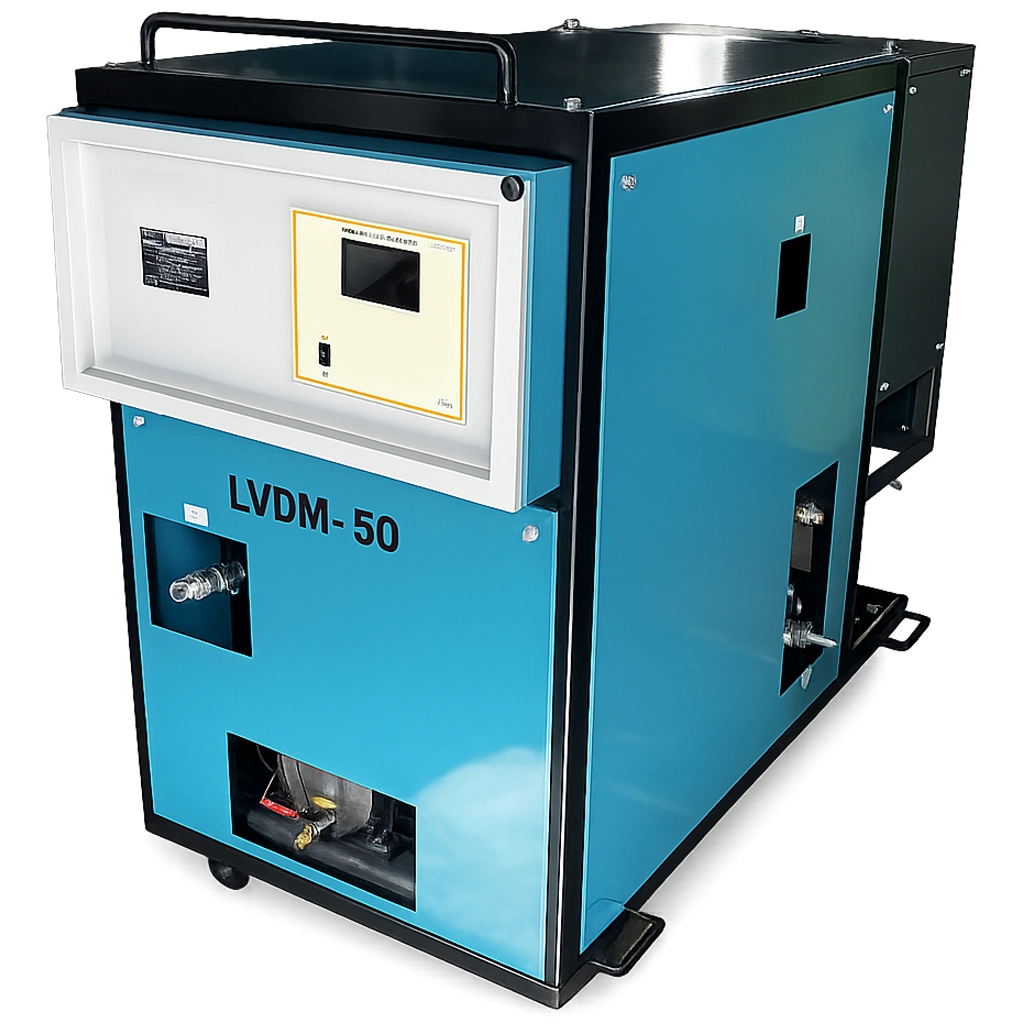
Low Vacuum Dehydration machine provide oil purification equipment designed to remove moisture and water contamination from different industrial oils. Depending on the application, manufacturers can offer systems in different capacities, configurations, and automation levels. These machines can be designed for hydraulic oil, lubricating oil, turbine oil, transformer oil, gear oil, and other suitable industrial fluids. An experienced manufacturer can help industries select an appropriate system based on oil type, water contamination level, required flow rate, operating temperature, filtration requirements, and installation conditions. Proper technical selection helps ensure that the LVDH machine integrates effectively into an existing oil purification and maintenance program.
What Is a Low Vacuum Dehydration (LVDH) Machine?
A Low Vacuum Dehydration machine is an oil purification system designed primarily to remove water and moisture from industrial oil. The system creates a controlled vacuum environment in which water can evaporate at a lower temperature than it would under normal atmospheric pressure.
The contaminated oil is introduced into the dehydration chamber, where controlled heating and vacuum conditions encourage water to separate from the oil. The removed moisture is then discharged from the system, while the treated oil continues through the purification process.
Unlike ordinary particulate filtration, which primarily targets solid contaminants, dehydration focuses on one of the most damaging forms of oil contamination: water.
Why Is Water Contamination a Problem for Industrial Oil?
Water may enter industrial oil in several ways. Condensation can occur when equipment experiences temperature changes. Humidity, leaks, damaged seals, storage conditions, and maintenance activities can also introduce moisture.
Once water is present, it can create several challenges:
- Reduced lubrication effectiveness
- Corrosion of metallic components
- Increased oxidation of oil
- Formation of sludge or emulsions
- Accelerated additive degradation
- Reduced insulation performance in suitable electrical applications
- Increased wear of precision components
The severity of the problem depends on the type and quantity of water, oil characteristics, equipment design, and operating conditions.
Removing moisture at an early stage can therefore be an important part of an effective oil-maintenance strategy.
How Does an LVDH Machine Work?
The working principle of a Low Vacuum Dehydration machine combines controlled heating, vacuum, and separation.
Contaminated Oil Enters the System
Oil containing moisture is transferred from the equipment or reservoir into the LVDH machine. A suitable pumping arrangement maintains controlled oil circulation.
Pre-Filtration
Depending on the system design, the oil may first pass through a filtration stage to remove larger solid particles and protect downstream components.
Controlled Heating
The oil is heated to an appropriate temperature. The purpose is not to overheat the oil but to create conditions that support efficient moisture removal.
Vacuum Is Applied
The heated oil enters a vacuum dehydration chamber. Under reduced pressure, water can evaporate at a lower temperature than under atmospheric conditions.
Moisture Is Separated
Water in free, emulsified, or dissolved forms may be removed depending on the machine's design and operating conditions. The vapor is separated from the oil and directed toward the moisture-removal section.
Cleaned Oil Is Returned
After dehydration, the treated oil can be passed through additional filtration stages if required and returned to the equipment or storage reservoir.
The entire process can be repeated until the desired moisture condition is achieved, subject to the oil and equipment requirements.
Main Components of an LVDH Oil Purification Machine
A typical LVDH machine may include several integrated components:
- Vacuum dehydration chamber
- Vacuum pump
- Heating system
- Oil circulation pump
- Pre-filter
- Fine filtration unit
- Moisture separation system
- Temperature monitoring system
- Vacuum monitoring and control
- Control panel
- Oil inlet and outlet connections
- Safety and protection components
The exact configuration varies according to machine capacity, oil type, application, and manufacturer design.
Types of Water Contamination in Industrial Oil
Understanding the type of water present in oil is important when selecting a dehydration system.
- Free Water: Free water exists as a separate phase from the oil and is generally easier to identify and remove.
- Emulsified Water: Emulsified water consists of small water droplets dispersed throughout the oil. It can be more difficult to separate because the water and oil form a stable mixture.
- Dissolved Water: Dissolved water is present at the molecular level within the oil. Removing it may require more controlled dehydration conditions.
An LVDH system can be selected according to the expected moisture condition and required oil cleanliness.
Applications of Low Vacuum Dehydration Machines
Low vacuum dehydration technology is useful in many industrial environments where water contamination must be controlled.
Hydraulic Oil Systems
Moisture can affect hydraulic components and contribute to corrosion and oil degradation. Dehydration helps maintain better oil condition.
Turbine Oil Systems
Turbine lubrication systems require careful control of oil quality. Moisture removal can form part of a broader turbine oil purification program.
Transformer Oil Applications
Transformer oil requires appropriate moisture control because water can affect its insulating properties. Suitable purification equipment can help maintain oil condition.
Lubrication Systems
Industrial lubrication systems can accumulate moisture through condensation and environmental exposure. Dehydration helps control water contamination.
Gear Oil Systems
Moisture in gear oil can contribute to corrosion and lubrication problems. Removing water can support better gear lubrication and maintenance.
Industrial Manufacturing Equipment
Manufacturing plants often operate numerous oil-dependent machines. An LVDH system can be used as part of centralized or mobile oil purification practices.
Benefits of an LVDH Machine
- Effective Moisture Removal: The primary purpose of the machine is to remove water and moisture from suitable industrial oils under controlled vacuum conditions.
- Helps Protect Machinery: Reducing moisture can help minimize corrosion and moisture-related degradation of machine components.
- Supports Better Oil Performance: Maintaining appropriate moisture levels can help oil perform its lubrication and protective functions more effectively.
- Supports Oil Reuse: When oil remains chemically suitable for continued operation, moisture removal can help restore its physical condition and potentially reduce unnecessary oil replacement.
- Preventive Maintenance Support: Regular dehydration can form part of a proactive oil-maintenance strategy, helping industries address moisture contamination before it contributes to larger problems.
- Reduced Downtime: Effective oil purification can support equipment reliability and help maintenance teams manage contamination without immediately replacing the entire oil charge.
LVDH vs. Conventional Oil Filtration
Traditional filtration and vacuum dehydration address different contamination problems.
Conventional filtration is primarily designed to remove solid particles such as dirt, dust, and wear debris. An LVDH system focuses mainly on water and moisture contamination.
For this reason, many industrial oil purification systems combine particle filtration and dehydration. A multi-stage purification system can address different types of contamination and provide more comprehensive oil treatment.
The correct configuration depends on the oil type, contamination condition, equipment requirements, and desired cleanliness level.
How to Choose the Right LVDH Machine?
Selecting an LVDH machine requires careful evaluation of the application.
- Oil Type: Identify whether the system will process hydraulic oil, turbine oil, transformer oil, lubricating oil, gear oil, or another compatible fluid.
- Oil Capacity: Determine the total quantity of oil that requires treatment and the desired processing time.
- Moisture Level: Understanding whether the contamination is free, emulsified, or dissolved water helps determine the appropriate dehydration capability.
- Required Flow Rate: The machine should provide a suitable flow rate for the oil volume and maintenance schedule.
- Filtration Requirements: If the oil also contains solid contaminants, consider a system that combines dehydration with appropriate particle filtration.
- Operating Temperature: The machine should maintain suitable temperatures without unnecessarily exposing the oil to thermal stress.
- Vacuum Performance: Vacuum capability is an important consideration because the dehydration process depends on controlled pressure conditions.
- Automation and Safety: Industrial users should evaluate temperature controls, vacuum monitoring, alarms, safety protection, and automated operating features.
- Manufacturer Support: Installation assistance, maintenance guidance, spare-parts availability, warranty, and technical support should also be considered before purchasing the equipment.
Maintenance Tips for LVDH Machines
Regular maintenance helps maintain consistent dehydration performance. Operators should inspect filters, vacuum pumps, heating components, seals, valves, sensors, and oil circulation components according to the manufacturer's recommendations.
The vacuum system should be checked regularly for leaks because loss of vacuum performance can affect moisture-removal efficiency. Filters should also be replaced or cleaned when required.
Oil analysis is equally important. Testing can help determine moisture content and other oil-quality parameters and provide useful information about whether additional purification or oil replacement is necessary.
Conclusion
A Low Vacuum Dehydration (LVDH) machine provides industries with an effective way to manage water and moisture contamination in industrial oil systems. By combining controlled heating and vacuum conditions, the technology allows moisture to be separated from oil under suitable operating conditions.
For industries using hydraulic systems, turbines, transformers, gearboxes, lubrication circuits, and other oil-dependent equipment, controlling moisture can support equipment protection, oil quality, and reliable operation.
The right LVDH machine should be selected according to oil type, oil volume, moisture condition, required flow rate, filtration requirements, operating temperature, vacuum performance, and maintenance needs. When integrated with regular oil analysis and preventive maintenance, an LVDH system can become a valuable part of a modern oil-purification strategy.
For Indian industries, working with an experienced Low Vacuum Dehydration machine manufacturer can also make the selection process easier by providing application-specific guidance and suitable equipment configurations. With the right purification approach, businesses can manage oil contamination more effectively, protect valuable equipment, and build a more reliable and efficient maintenance program.
Explore our low vacuum dehydration machine to learn more about the equipment and its suitability for your oil purification requirements.
FAQs
An LVDH machine, or Low Vacuum Dehydration machine, is an oil purification system designed to remove water and moisture from industrial oil using controlled heating and vacuum conditions.
Depending on its design and operating conditions, an LVDH system can help remove free, emulsified, and dissolved moisture from suitable industrial oils.
They are used in hydraulic systems, turbine oil systems, transformer oil applications, gearboxes, lubrication systems, manufacturing equipment, and other industrial oil applications.
LVDH primarily targets water and moisture. Solid particles are generally handled through dedicated filtration stages, which may be integrated into the same oil purification system.
Consider the oil type, oil volume, moisture level, required flow rate, operating temperature, filtration requirements, vacuum performance, automation, and maintenance requirements before selecting a machine. Visit our home page to explore our solutions, or contact us to discuss your application.
Need help choosing the right oil filtration or purification machine?
Talk to our team with your oil type, volume and contamination details and get a suitable recommendation.
Enquire Now WhatsApp UsExplore our home page for more industrial oil purification solutions, or contact us to discuss your application and requirements.